Lowering A1C is rarely about one heroic change. The patients who drop from 8.5% to under 7% in a quarter almost always stack four habits — better food choices, the right kind of movement, real sleep, and a stress-handling routine. Each lever is modest on its own but they compound. This is the complete protocol, with the evidence behind each piece.
Food: fiber-first, low glycemic load, protein at every meal
The Mediterranean and low-carb patterns both work — Diabetes Care’s 2019 meta-analysis found either approach drops A1C by 0.5 to 1.5 percentage points when followed consistently. The shared mechanism is reduced post-meal glucose excursions. Eat fiber and protein before refined carbs at every meal; this single sequencing change blunts the glucose spike by 30–40% in published trials.
Exercise: resistance + aerobic, not one or the other
The 2016 ADA position statement is explicit: combined training beats either alone. Resistance work (2–3 sessions weekly) builds muscle mass, which acts as a glucose sink. Aerobic work (150 min/week moderate, or 75 vigorous) improves insulin sensitivity for 24–48 hours after each session. A 10-minute walk after each main meal adds another 0.3–0.5% drop in A1C.
Sleep: under 6 hours wrecks insulin sensitivity
Sleep Medicine Reviews documented that one week of 5-hour nights cuts insulin sensitivity by 25%. Aim for 7–8 hours in a cool, dark room with a consistent schedule. If you snore or wake unrefreshed, screen for sleep apnea — untreated apnea raises A1C by 0.3–0.5% on its own.
Stress: cortisol is a glucose-raising hormone
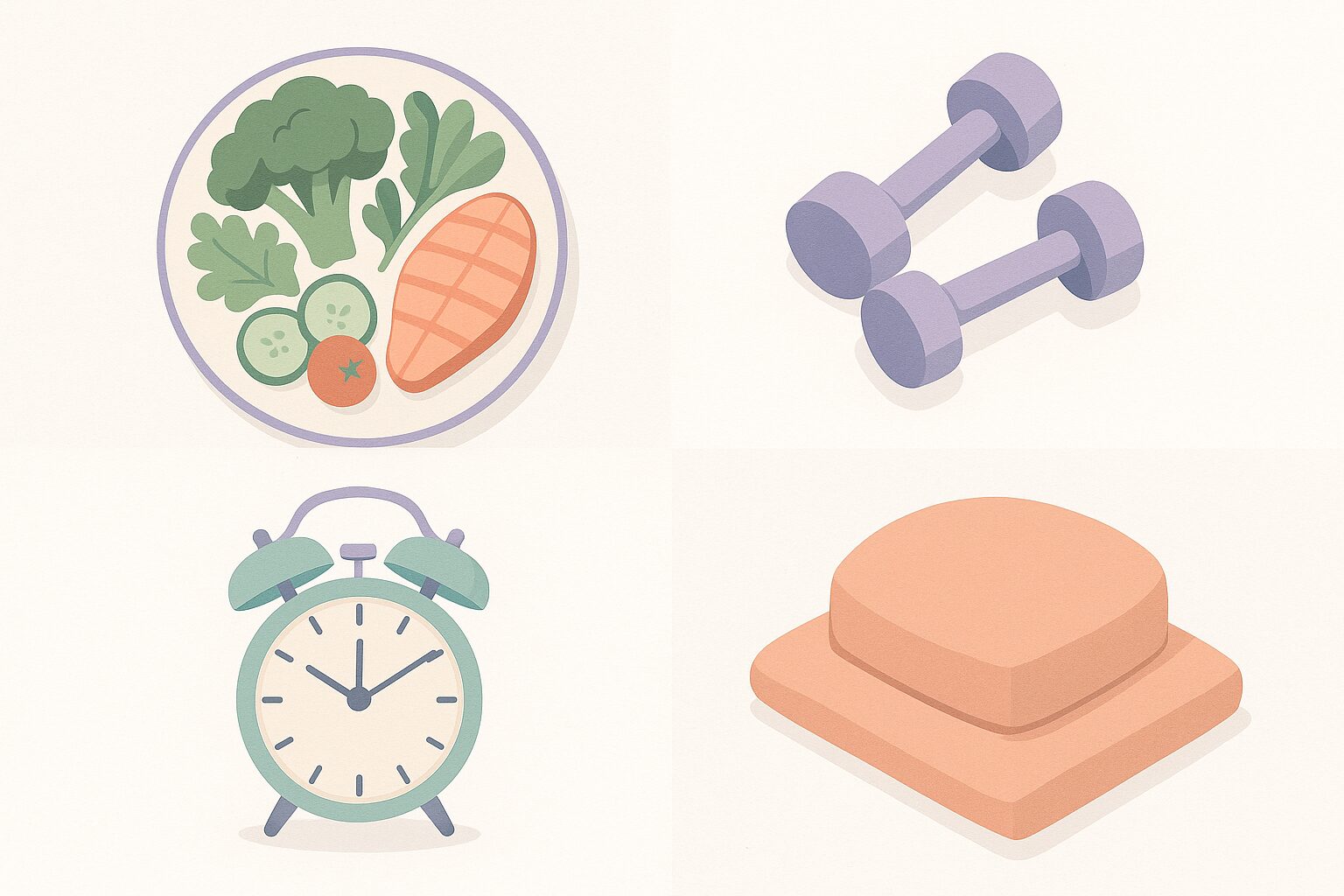
| Lever | Daily commitment | A1C impact |
|---|---|---|
| Fiber-first meals | 30g fiber, protein at each meal | −0.5 to −1.5% |
| Combined exercise | 150 min aerobic + 2x resistance | −0.6 to −0.8% |
| Sleep | 7+ hours nightly | −0.3 to −0.5% |
| Stress regulation | 10–20 min daily practice | −0.2 to −0.4% |
Once the protocol clicks, the next question is hitting the timeline — see the 90-day A1C below 7 framework. For the food details, read foods that lower A1C fast.
Frequently Asked Questions
Which lever should I start with?
Sleep, if you sleep under 7 hours. Otherwise food sequencing — adding fiber and protein before carbs at every meal. Both are low-friction and produce visible glucose changes within days on a CGM.
Can I do this without medication?
Many people with newly diagnosed type 2 diabetes can reach A1C below 7% with lifestyle alone in 6–12 months. Never change prescribed medication without your physician.
Does stress really matter that much?
Yes — chronic cortisol elevation triggers hepatic glucose output, which directly raises fasting glucose. Trials show 8 weeks of mindfulness training drops A1C by 0.3–0.5% on average.
Sources & Further Reading
- ADA Position Statement — Physical Activity & Diabetes
- NIH PubMed — Mediterranean diet & A1C meta-analysis
- CDC — Sleep & Type 2 Diabetes
- Mayo Clinic — Diabetes & Exercise